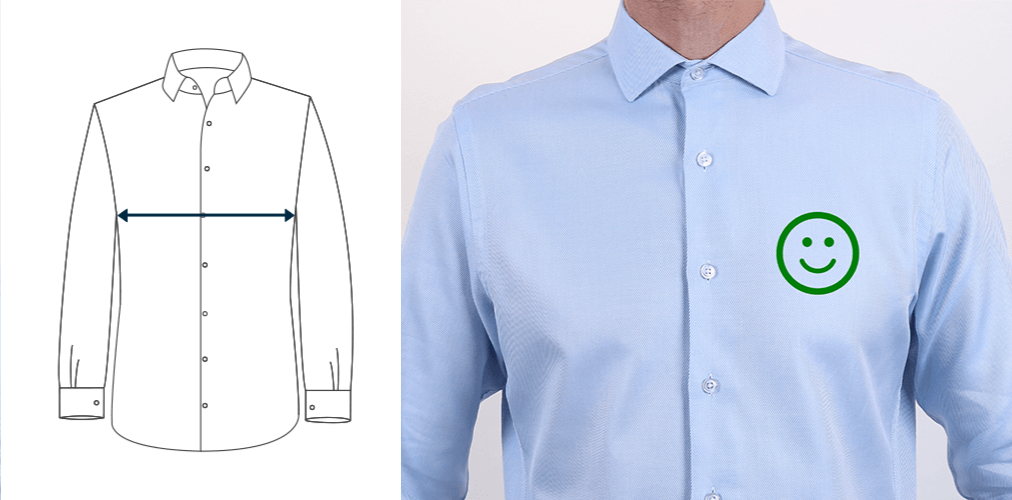
How should a shirt fit in the chest area?
LE CHEMISEUR® tips
🕺 Maintain sufficient freedom of movement
Avoid making the chest width too tight.
Small folds behind the armholes are normal and necessary. They allow you to raise your arms and move comfortably throughout the day.
🤏 Allow for shrinkage
We recommend washing your shirt two or three times before deciding whether any adjustments are needed.
The fabric will soften over time and may shrink by approximately 0.5 to 1 cm. Our AI already compensates for the specific shrinkage characteristics of each fabric.
🔀 Relationship with the armhole
The chest width and armhole height are closely related.
A tighter chest generally requires a slightly higher armhole, while a roomier chest often feels more comfortable with a slightly lower armhole. For this reason, our AI calculates these measurements together to maintain a balanced fit.
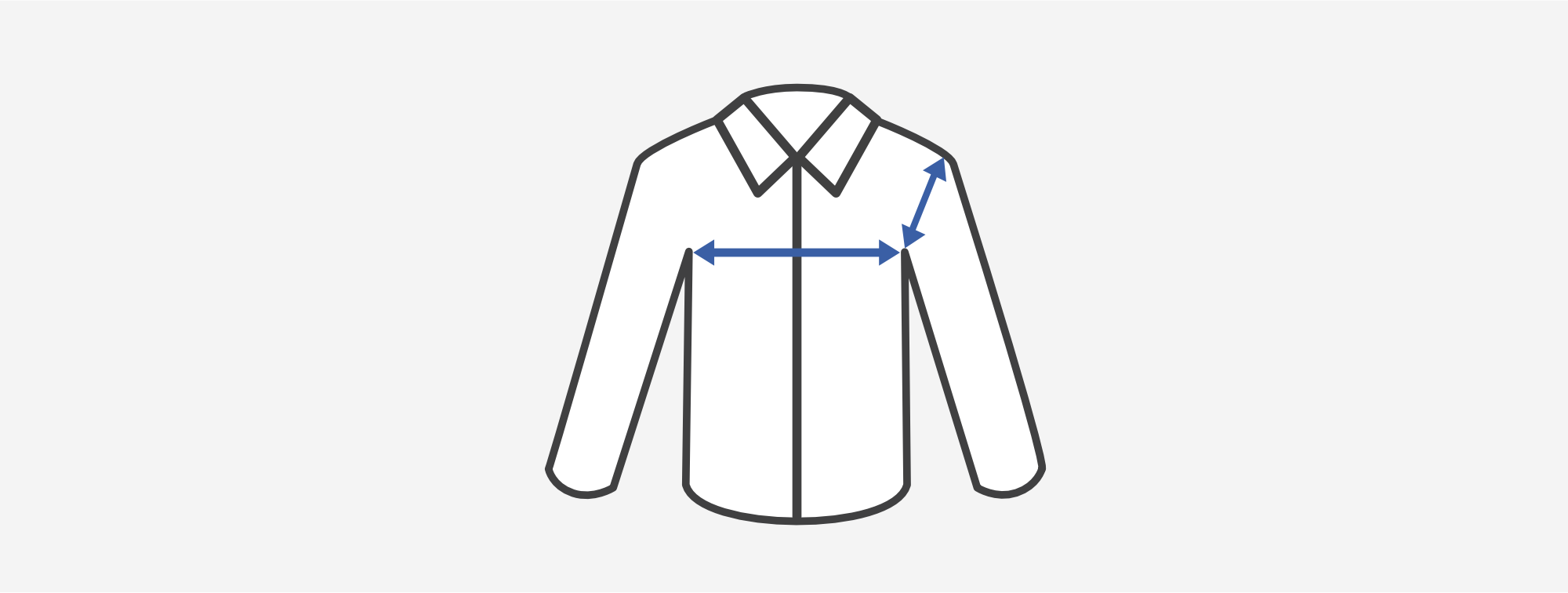
How to measure the chest on a shirt
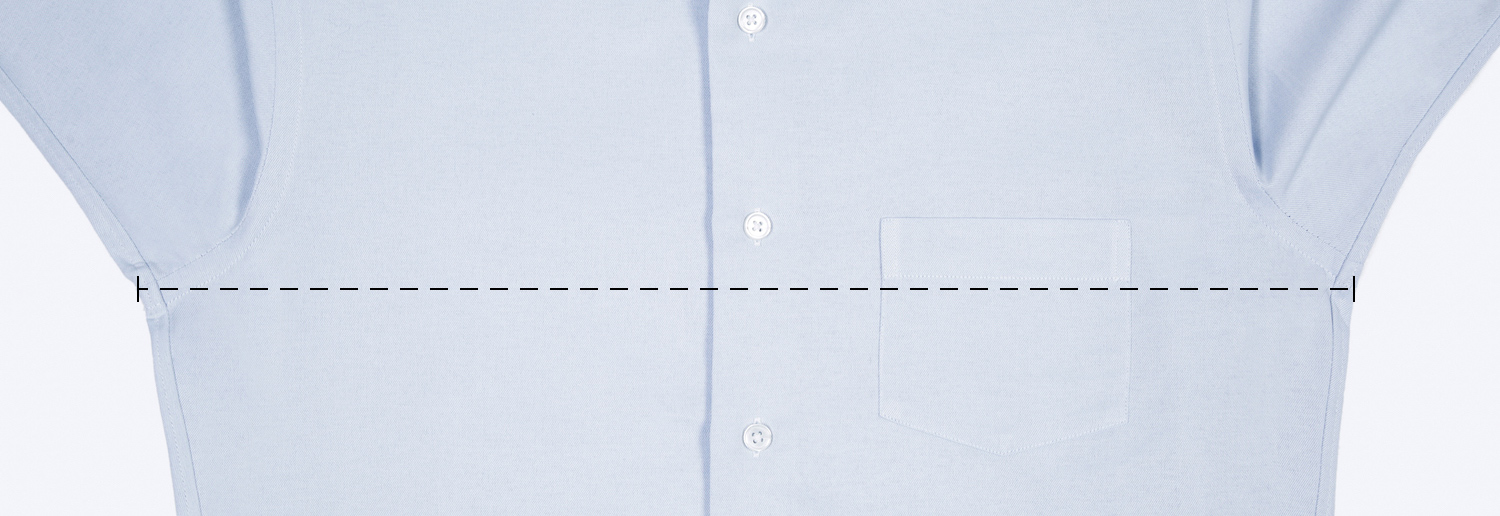
Tolerance : A gap of ± 1 cm between your measurement and your Fit Key is perfectly normal.
Updated on: 10/06/2026