How should a shirt waist fit?
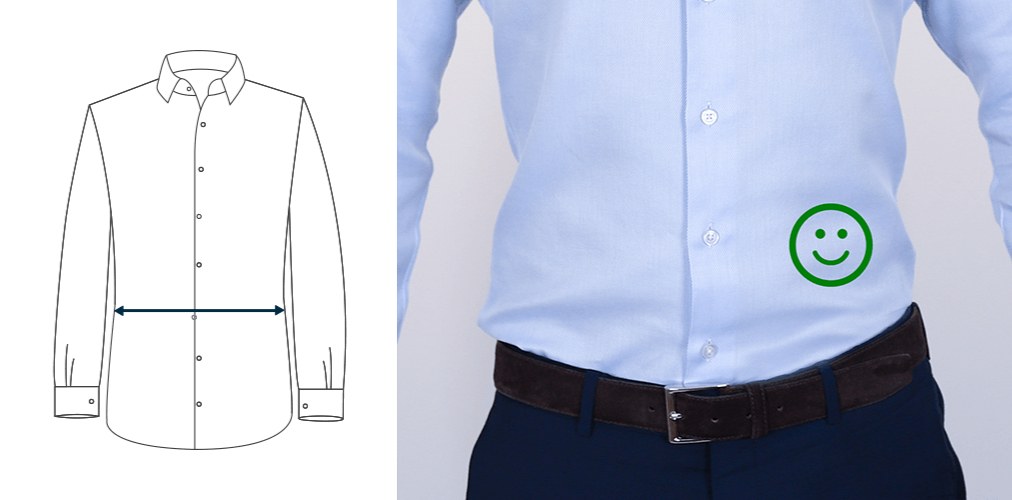
Tips from LE CHEMISEUR®
👔 What if I have a strong build?
Avoid choosing a shirt that is excessively wide.
A well-designed shirt should create a flattering silhouette and avoid a "baggy" appearance. We generally recommend a straight cut, where the waist width is similar to the chest width.
For larger sizes, the waist may be up to 2 cm wider than the chest, but we do not recommend going beyond this.
🏋️ Athletic or very slim builds
If you have an athletic V-shaped build or a very slim physique, you can choose a more tapered waist.
However, we recommend avoiding excessive tapering, which may create an overly pronounced hourglass silhouette.
⌛ Understanding the hourglass effect
The hourglass effect is mainly influenced by:
- The difference between the chest width and waist width (the "drop"), which should generally not exceed 10 cm.
- The difference between the hip width and waist width, which should generally not exceed 8 cm.
- The presence of back darts.
When the difference between the chest and waist reaches approximately 6 cm, back darts are often recommended. They shift the side seams towards the back and help reduce the visual hourglass effect.
The hourglass effect is usually more noticeable on shorter shirts, especially casual shirts worn untucked.
If you are slim and plan to wear your shirt untucked, you may prefer a slightly straighter cut by adding approximately 2 cm to the waist.
⚖️ Planning to lose weight?
Order a shirt that fits you today.
If you lose weight later, adding back darts is a simple alteration that can reduce the waist by approximately 2 to 4 cm, depending on the depth of the darts.
Making a shirt slimmer is relatively easy. Making a shirt larger is generally not possible and usually requires a remake.
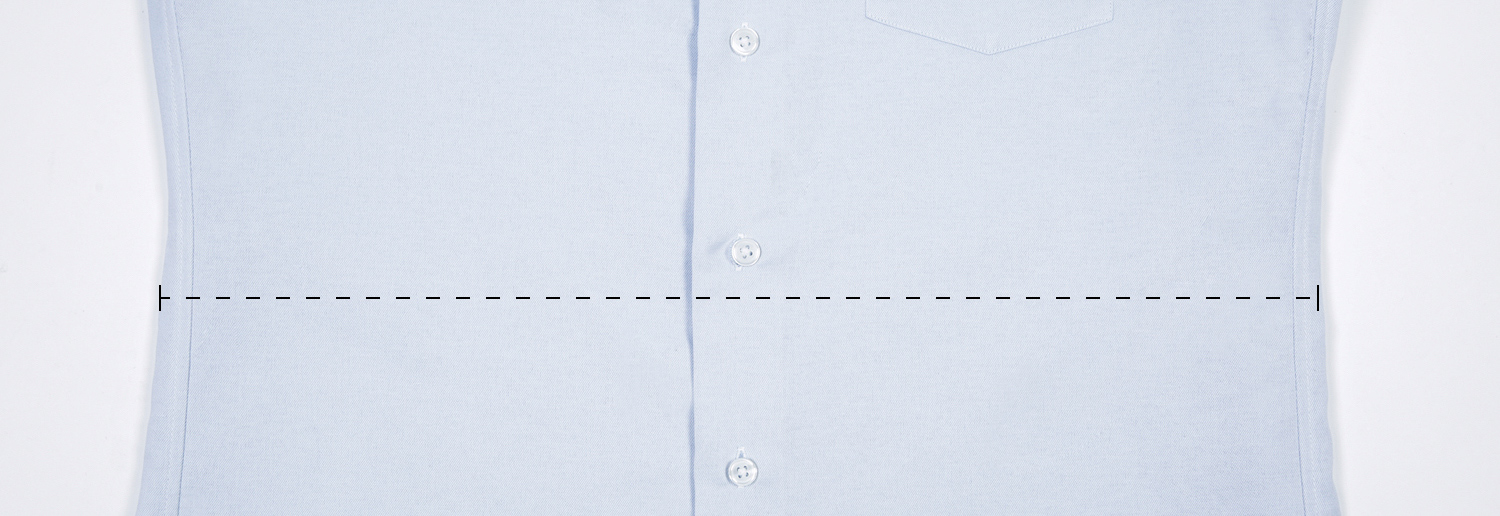
How to measure the waist on a shirt
Updated on: 10/06/2026